213 Deck
213 Deck: Advanced Marine Engineering Platform
213 Deck is an innovative platform that brings together advanced engineering and software solutions developed for the marine sector. This initiative, developed within 213 Technic, aims to transfer advanced analysis, simulation, and optimization capabilities developed in aerospace engineering to the marine industry. Thus, a high-performance engineering approach becomes applicable not only to air and space systems but also to marine vessels.
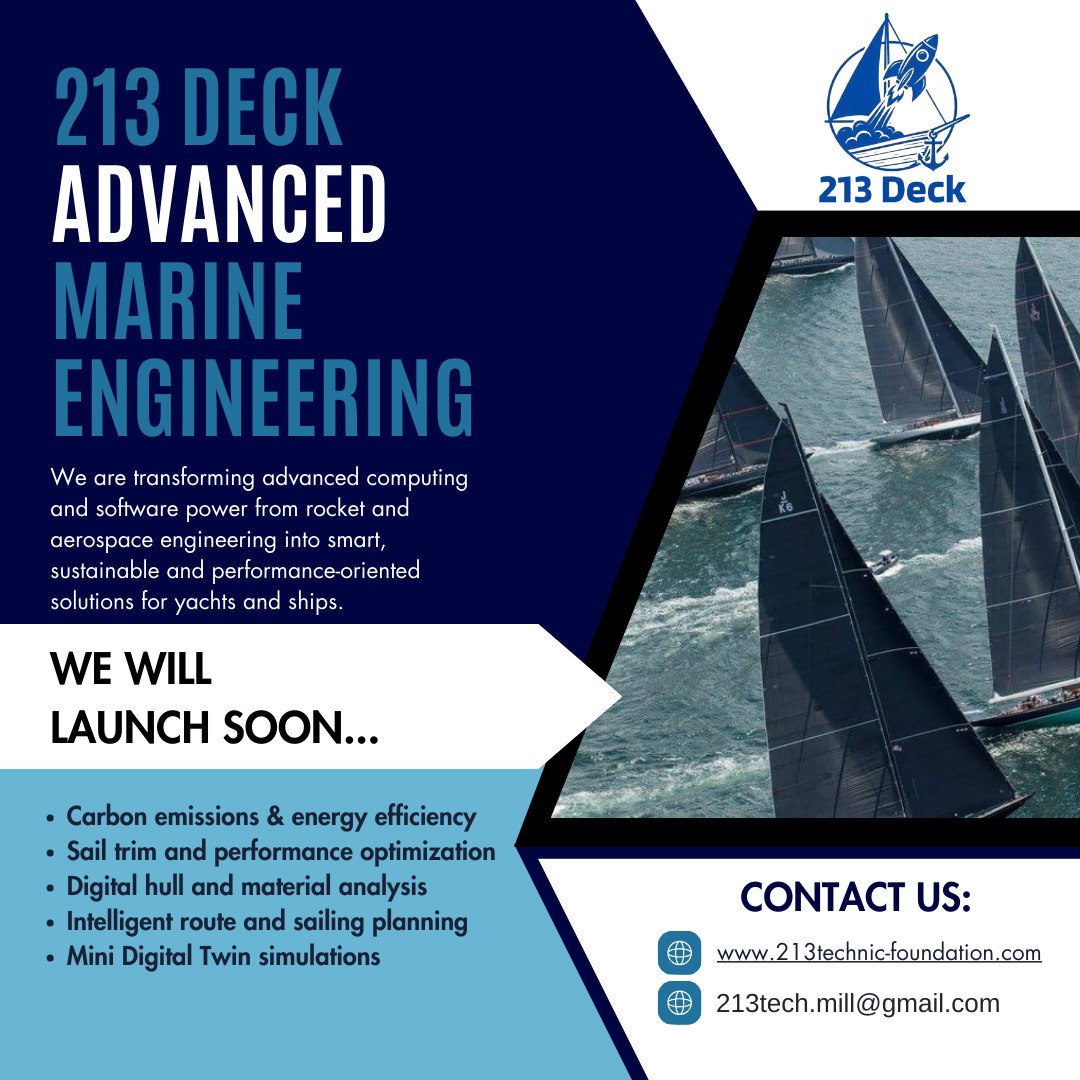
213 Deck's core vision is to develop intelligent, sustainable, and high-performance solutions for yachts, sailboats, and various marine vessels using modern engineering methods. Thanks to its advanced computational methods and software infrastructure, the platform enables the design, performance analysis, and operational planning processes of marine vessels to be carried out in a more scientific and data-driven manner.
One of the key focuses of this system is energy efficiency and environmental sustainability. Reducing carbon emissions is becoming increasingly critical in the marine sector today. 213 Deck, thanks to its developed analysis tools, can evaluate the energy consumption and carbon emissions of a marine vessel. This allows for the development of more environmentally friendly and sustainable solutions in design and operation processes.
Another key capability of the platform is sail and performance optimization. Especially in sailboats, the correct use of wind and the optimization of sail trim settings are of great importance. Thanks to engineering analyses and data-based calculations, 213 Deck helps increase the speed and efficiency of the boat by analyzing sail performance.
In addition, the system supports engineering studies such as hull and material analysis. Using digital analysis methods, the structural properties, material behavior, and performance characteristics of boat hulls can be examined. This contributes to the design of more durable, lighter, and efficient marine vessels.
213 Deck also offers intelligent route and voyage planning capabilities. Vessel journey plans can be optimized taking into account weather conditions, performance parameters, and operational data. This feature significantly contributes to increased safety and efficiency, especially in long-distance sea voyages.
One of the platform's notable innovations is mini digital twin simulations. This technology allows for the creation of a digital model of a marine vessel, simulating its behavior under different scenarios. This enables performance predictions before actual operation, reduces risks, and allows for more accurate design decisions.
The fundamental motivation behind the creation of 213 Deck is quite clear: to extend the strong engineering expertise gained in the aerospace industry. The advanced analysis and engineering capabilities developed by 213 Technic are transferred to the maritime sector through this platform. This approach constitutes a strong example of interdisciplinary engineering.
In conclusion, 213 Deck is a modern engineering ecosystem developed for the maritime industry. Through solutions in areas such as energy efficiency, performance optimization, digital analysis, and intelligent planning, it aims to contribute to the safer, more efficient, and more sustainable design and operation of marine vessels.
The essence of this vision is quite simple: to transfer the engineering power gained in the air to the sea.