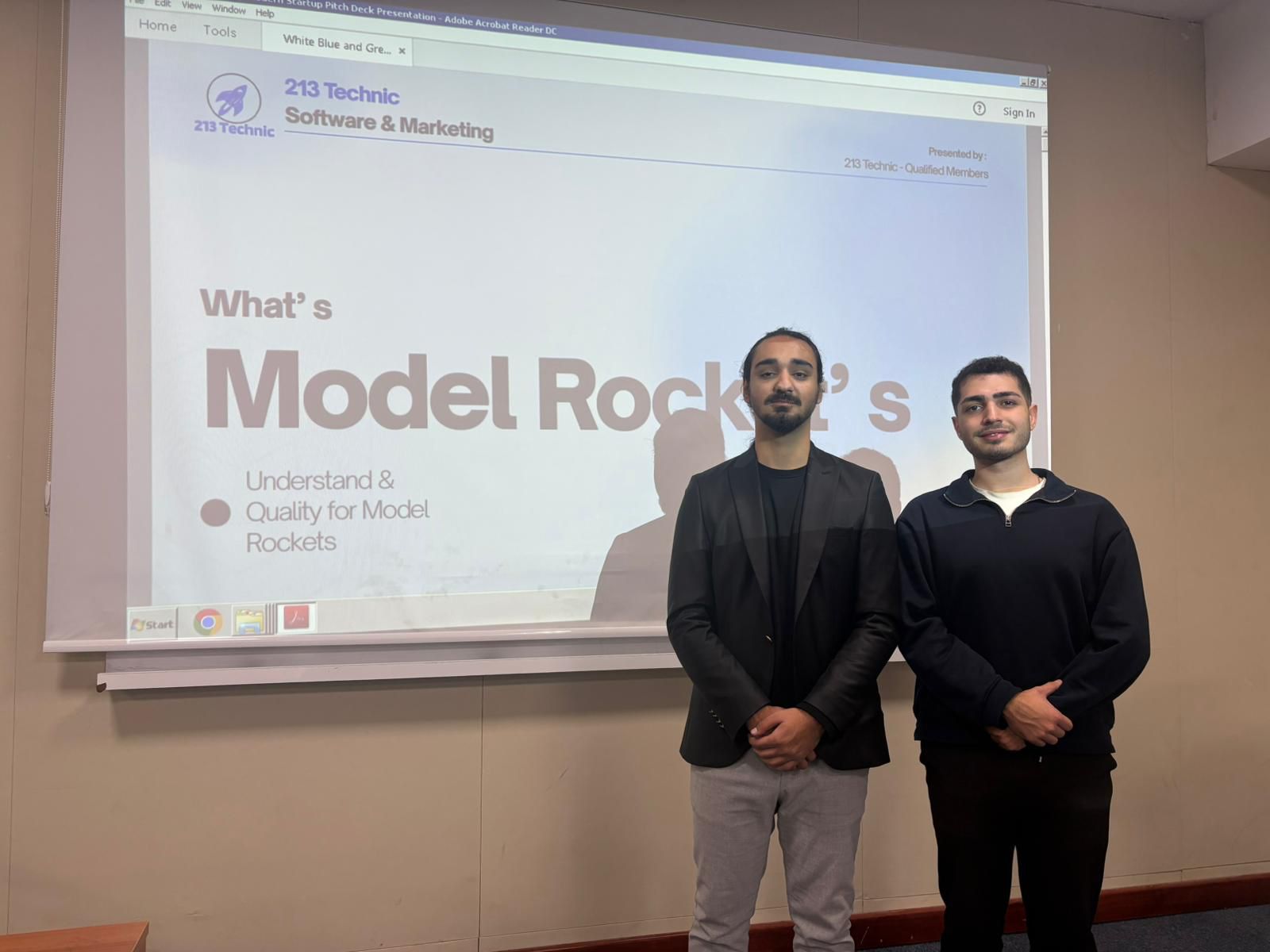
Model Rocketry from 213 Technic at the University of Kyrenia: Inspiring Tomorrow's Engineers
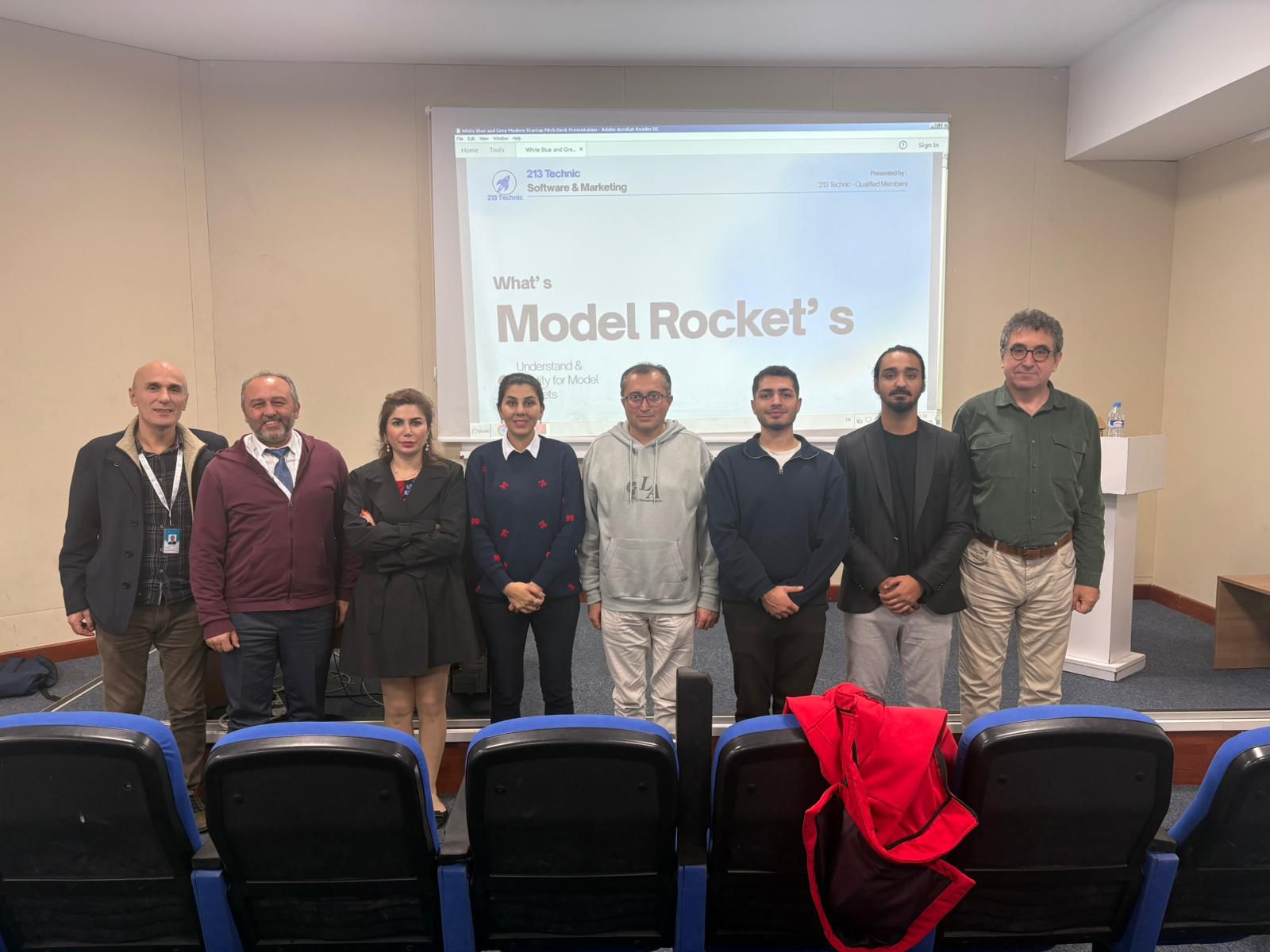
The event was held in the University of Kyrenia conference hall, with strong attendance from students and faculty across engineering disciplines. The presentation stood out not only for conveying theory but also for offering an applied engineering perspective.
A Comprehensive Look at Model Rocketry
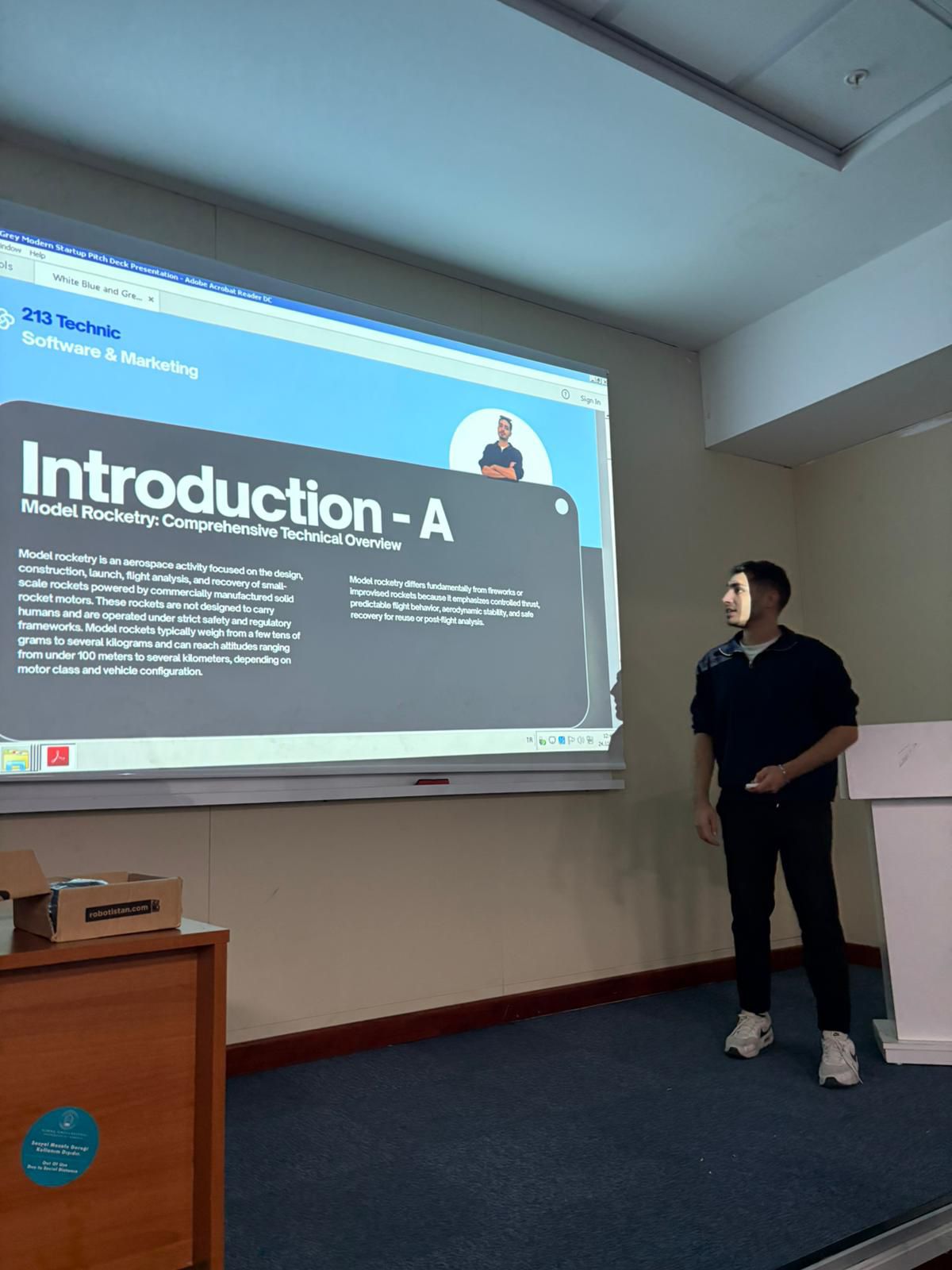
The 213 Technic team began with a clear definition of model rocketry. Participants learned that model rockets represent a multidisciplinary engineering field spanning design, manufacturing, launch, flight analysis, and recovery. It was emphasized that, despite their small scale, these systems embody serious engineering principles.
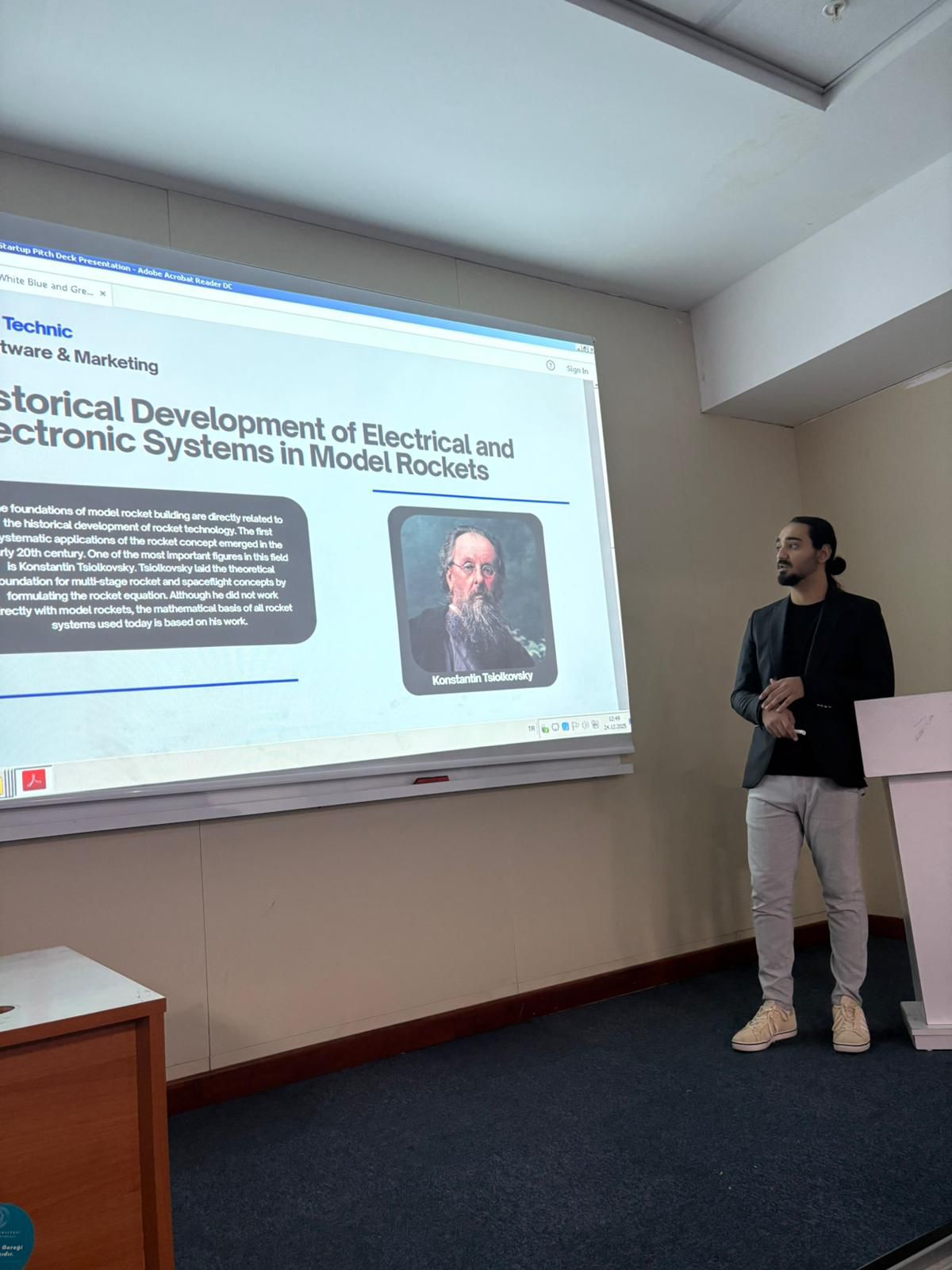
The talk also devoted substantial space to the historical development of model rocketry. Model rockets emerged in the mid-20th century as a safer alternative and have since evolved into an educational and research domain with international standards. Pioneering theoretical contributions to rocket science were noted as still relevant today.
From Education to Research: Broad Applications
The session explained that model rocketry is not merely a hobby but an important tool for teaching and research. In particular, for physics and engineering students it supports hands-on learning of fundamentals such as Newton's laws, aerodynamics, momentum, and stability.
Presenters also highlighted that model rockets are used actively in university projects, STEM programs, and early-stage aerospace research. Their low cost and repeatability make them especially accessible to students.
Rocket Systems and the Flight Sequence
In the technical segment, the components of a model rocket were examined in detail structural elements such as the nose cone, body tube, fins, and motor systems, as well as recovery systems like parachutes and sensor-based avionics.
The flight was reviewed in stages: ignition, ascent, coast, apogee, parachute deployment, and landing. Each phase involves different physical forces, and the design must be optimized accordingly.
Electronics and Avionics in Focus
One of the most compelling parts covered electronic and software systems in model rockets. The 213 Technic team explained that modern rockets are no longer purely mechanical systems; they have become complex platforms integrating sensors, microcontrollers, and communications.
Gallery